
Growing Sweet Potatoes
Ah the delicious creamy taste of a sweet potato! I had no idea until moving to Vancouver Island a few years ago that it was possible to grow sweet potatoes on the island. It’s been fun the past few years experimenting with how to best grow them with an obvious ultimate winner to growing them successfully.
How to Start Sweet Potato Slips
(1) Near the beginning of February, you should collect some medium sized organic sweet potatoes from the grocery store or from your harvest from previous harvest. Make sure no mold is growing on them.
(2) Fill a tray with potting soil or seed starter mix and nestle the sweet potatoes lengthwise so the soil comes half way up. Ensure the soil is damp, but not soaking.
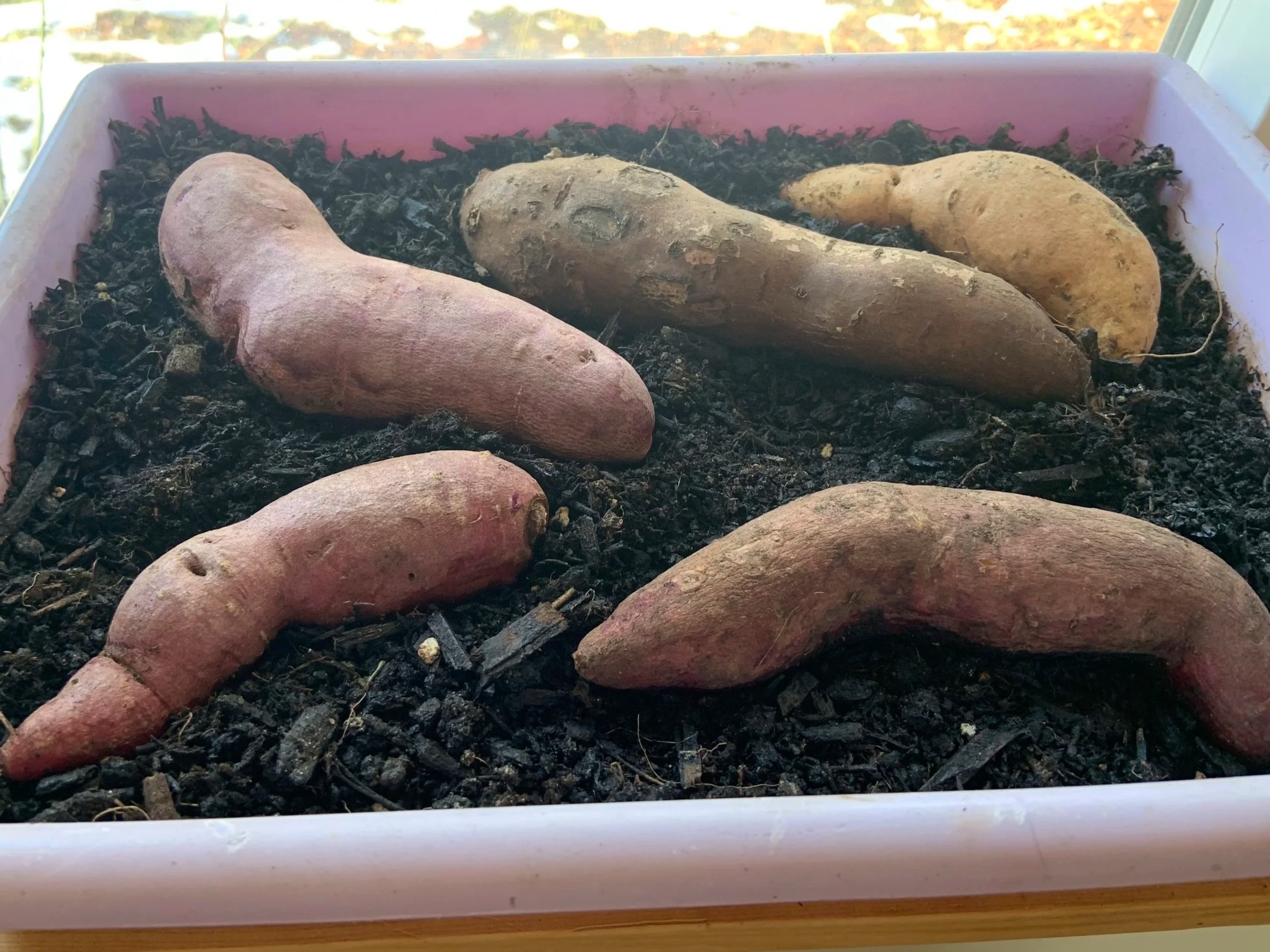
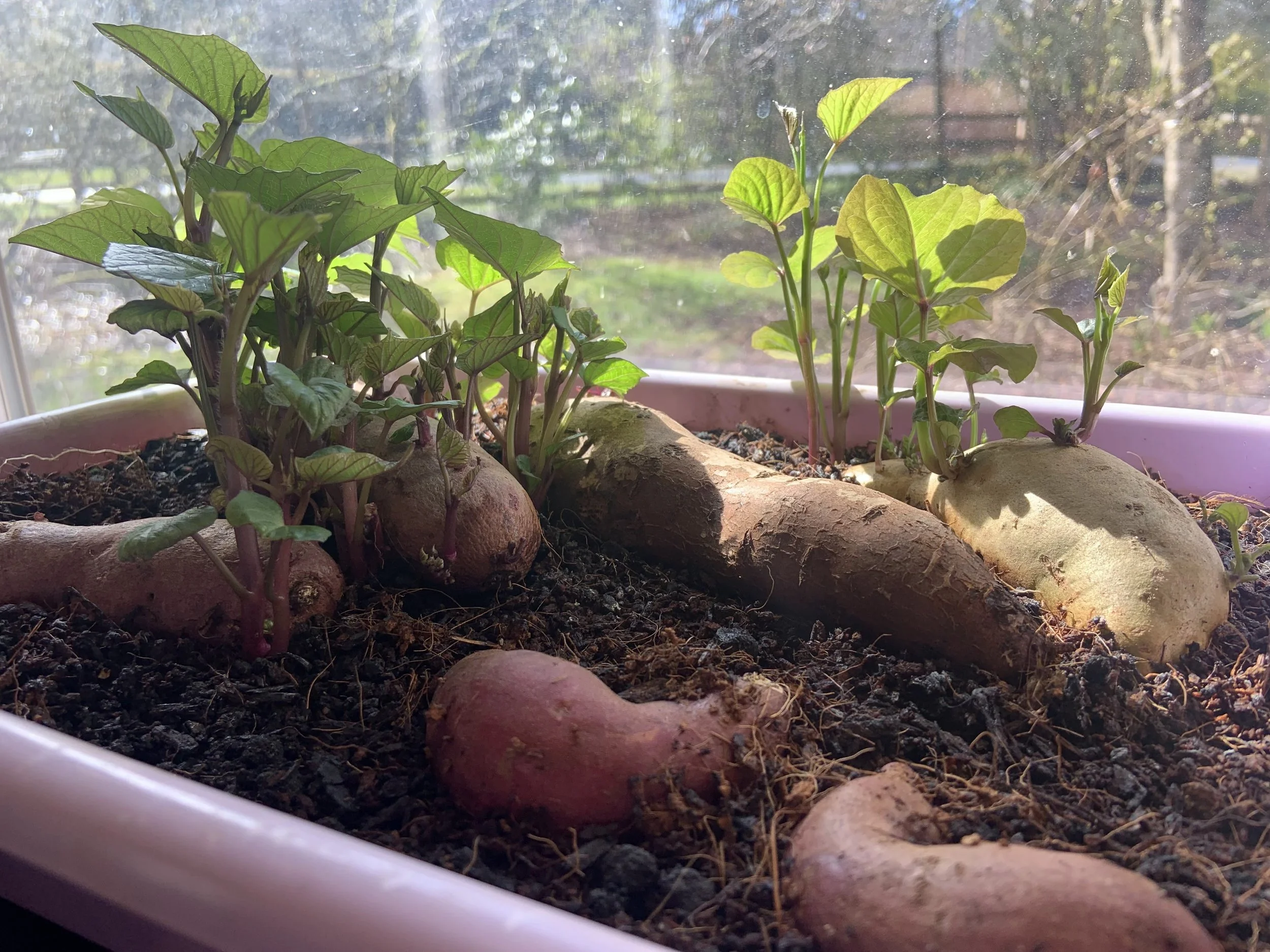
(3) Lightly water or spray with a spray bottle the soil if it seems to get a bit dry on the top every few days in the coming weeks. If they are overwatered, they will mold. In about 3-4 weeks, you will start to see buds forming on the sweet potatoes. These little buds will create the slips!
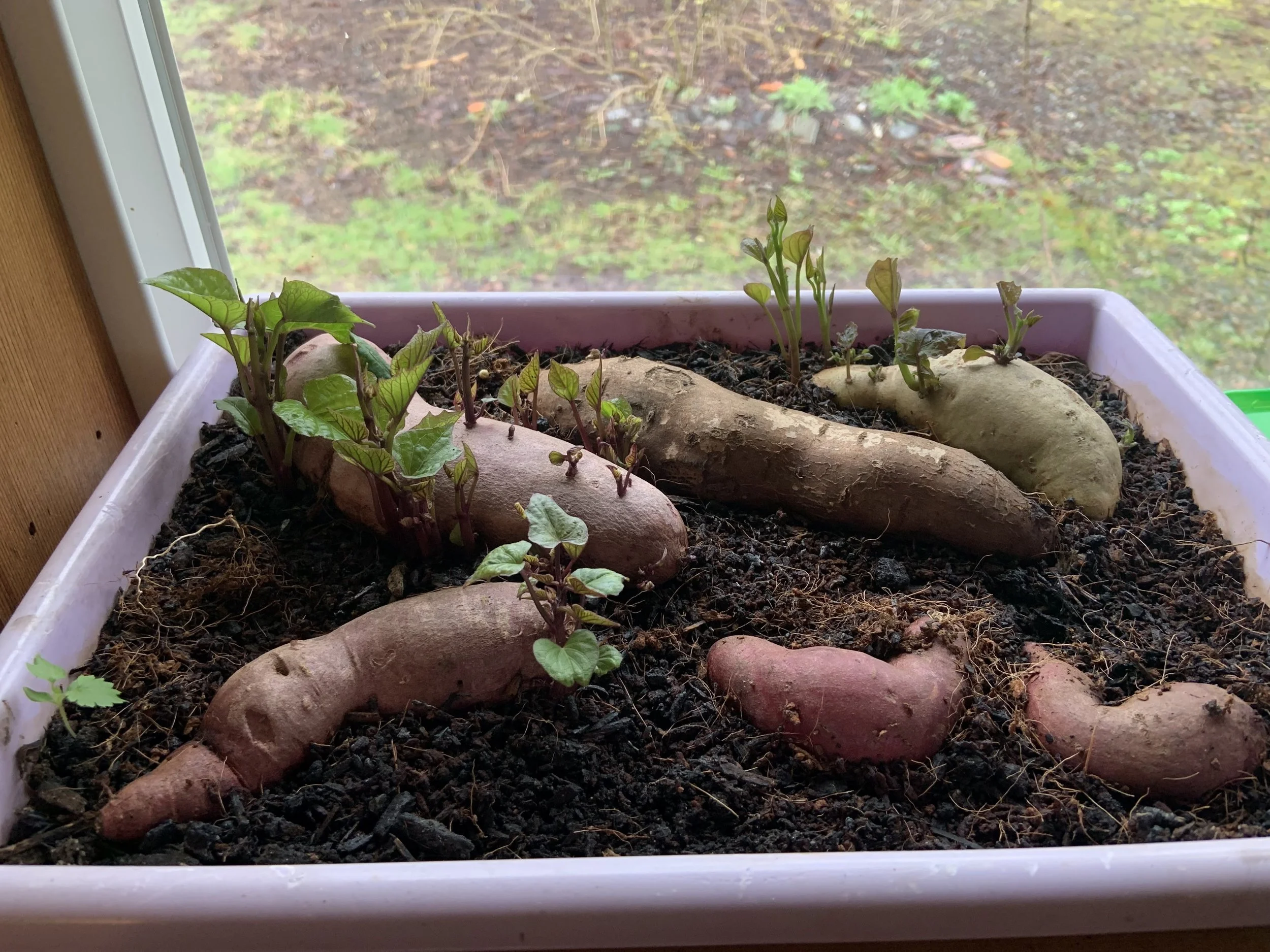
(4) After the slips get about 6 inches or so, you can snap them off (or cut them) and put them in a jar of water. Placing them in water will allow them to form roots. If the slips are in the soil, if you are careful to tease/rip it off the sweet potato, it will come already with roots!
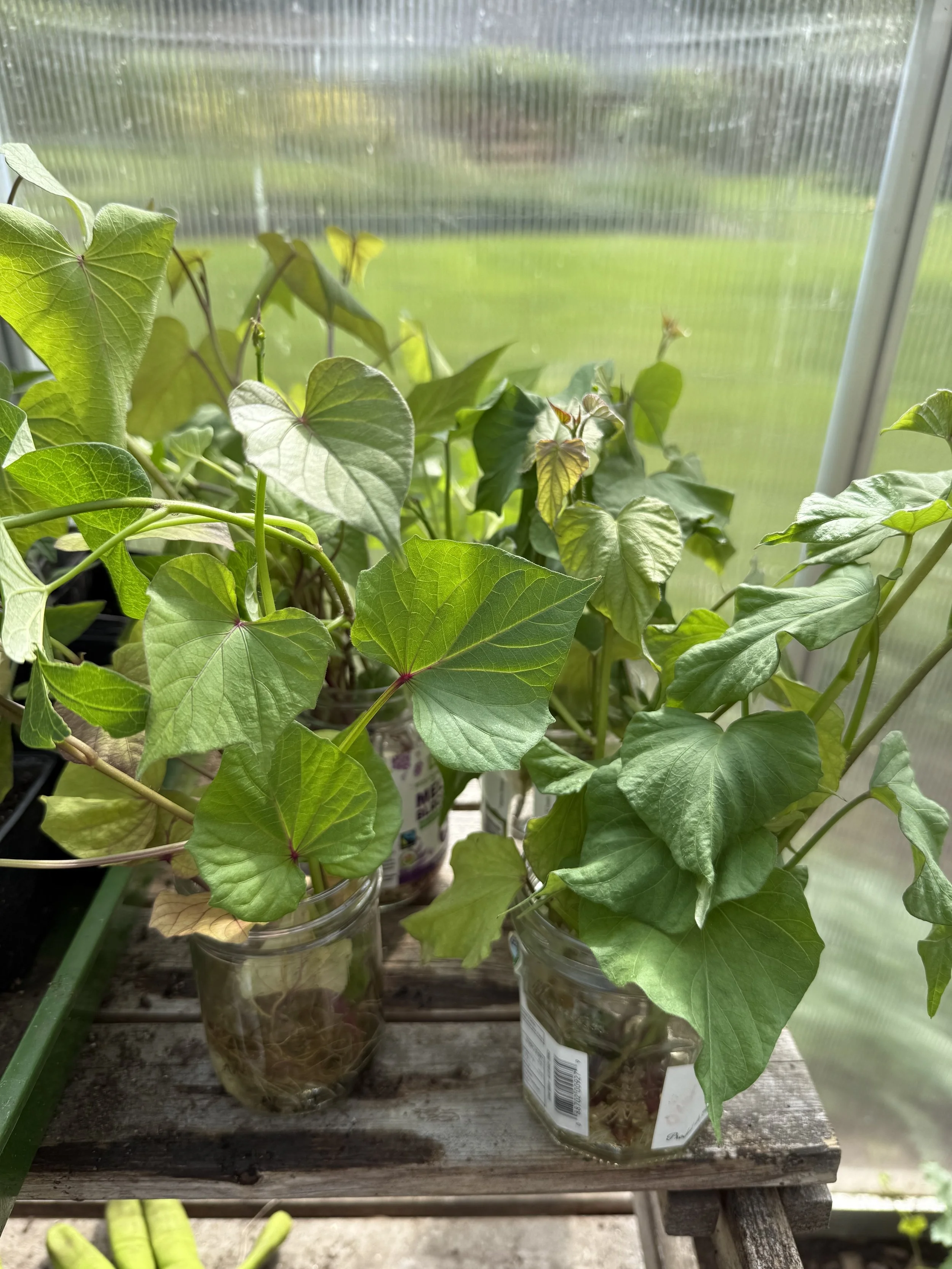
(5) Nearing the end of April to the beginning of May, the collection of slips you have created will have grown a lovely network of roots and you can pot them up and put in your greenhouse.
(6) Once the night time temperatures are above 10°C consistently, you can plant them out into your garden! After experimenting with putting them in my greenhouse, straw, directly into the garden, and under plastic, the ones that produced the best and had substantial sized sweet potatoes have been the ones under black plastic. They perform the best because the black plastic provides consistent heat and moisture.
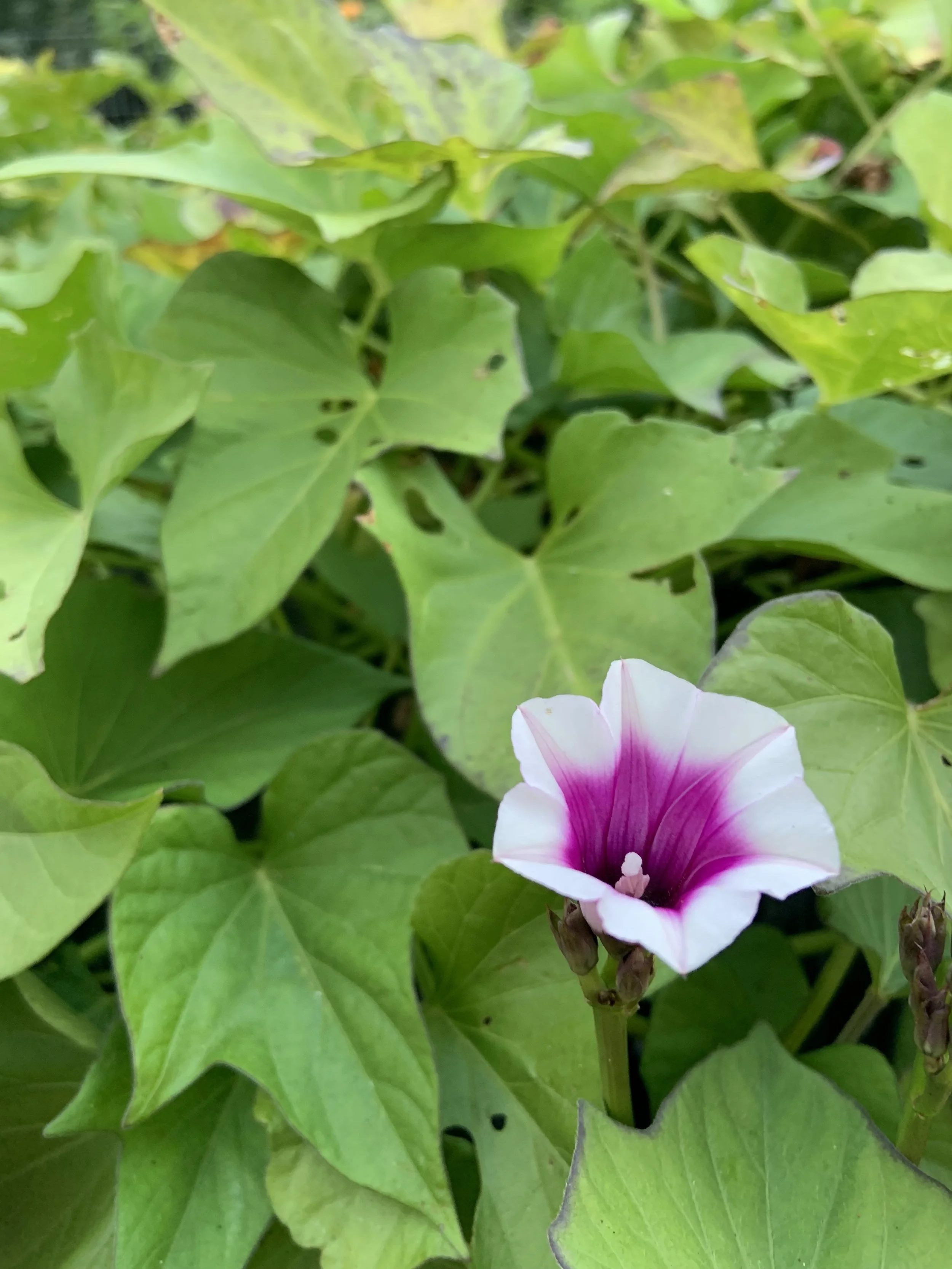
(7) Come October, or whenever the leaves die back, you can harvest them.
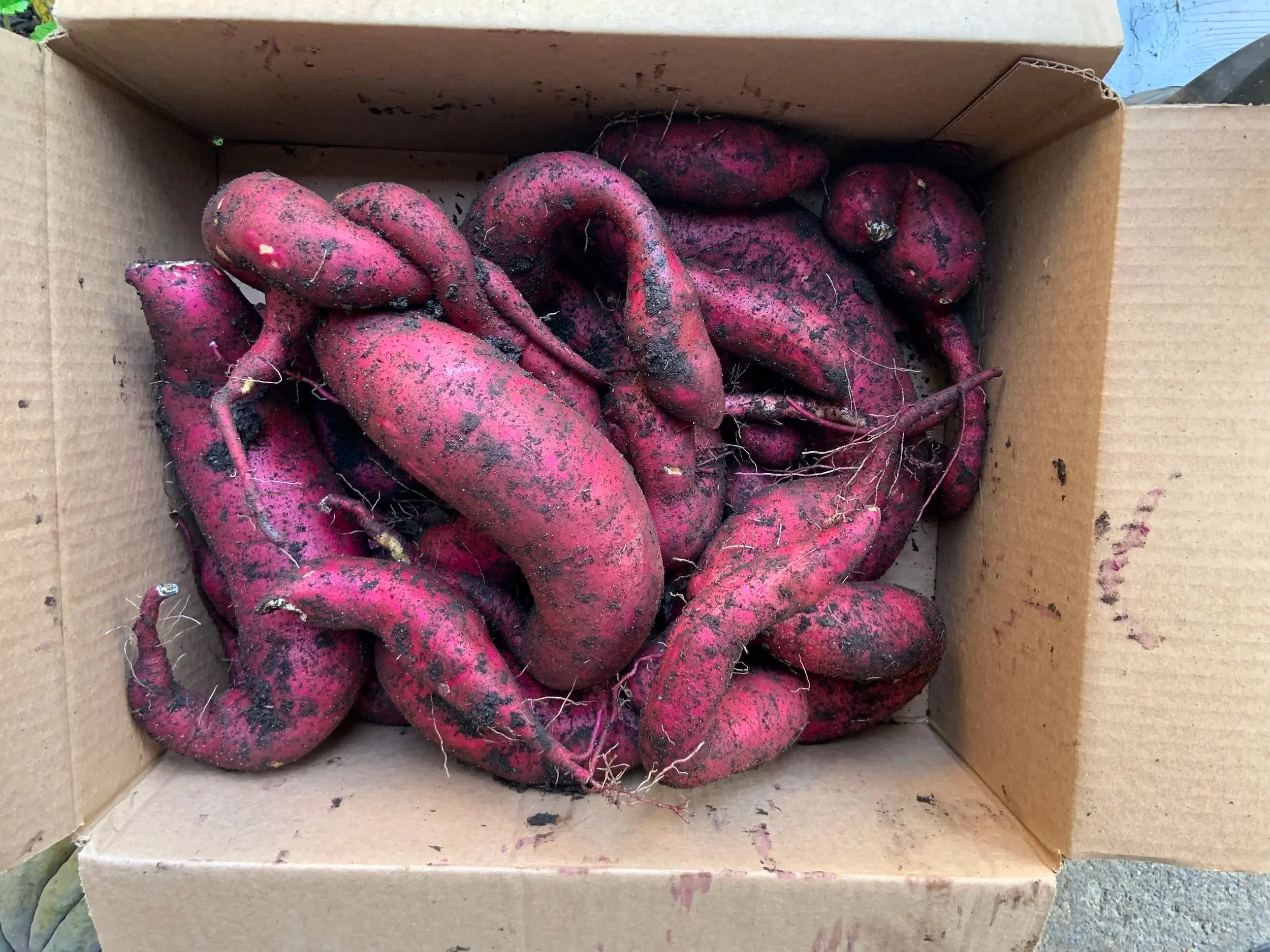
Harvest of one of my favourite sweet potatoes - the Japanese Murasaki. They are less sweet, creamier, and hold their shape better compared to the more familiar orange sweet potato.
(8) For best storage you can cure your sweet potatoes for storage at 26-30°C at 85-95% humidity for a week. The solution for this is to put them in ziplock bags (punctured with a few holes) near your warmest window to create that environment. Maybe putting a blanket over them at night. Then store them at 13-15°C at 60% in the dark, wrapped in newspaper. Or just put them inside your home at room temperature until you are ready to use. They will have a shorter “lifespan” but will still keep for a couple months.
Different varieties of Sweet Potatoes:
There are so many options when it comes to choosing sweet potatoes - and a lot of them you can just purchase from the grocery store to start your own slips. Just ensure that they are organic because the non-organic are treated with sprout inhibitors, so won’t create eyes on the potatoes.
White Flesh:
Japanese Sweet Potato (Murasaki): White flesh with purple skin
Hannah/Jersey: Cream-coloured flesh with tan skin
Purple Flesh:
Charleston - Deep purple flesh with deep purple skin
Stokes - Lighter purple flesh with lighter purple/brown skin
Okinawan - Lighter purple flesh with light brown skin
Orange Flesh:
Covington - Deep orange flesh with darker red/orange skin
Beauregard - Deep orange flesh with copper/brown skin
Jewel - Deep orange flesh with tan skin
Garnet - Bright orange flesh with red skin
Have fun with amazing nutrient dense tuber! Also, fun fact, the leaves are edible and can be a replacement for spinach. They are rich in iron, magnesium and B-vitamins.